
Mister Sparky

Pompano Beach, FL

  • Home
  • Services
    • Breakers & Fuses
      Ceiling Fans
      Chandelier Installation
      Circuit Repair
      Commercial
      Electrical Grounding
      Safety Inspection
      Outlet Installation
    • Outlet Repair
      Electrical Panel Replacement
      Electrical Repairs
      Troubleshooting
      Electrical Emergencies
      EV Charging Stations
      Generator Installation
      Light Fixture Installation
    • Lightning Strikes
      Meter Can Replacement
      Outdoor Lighting
      Smoke Detectors
      Surge Protection
      House Rewiring
  • Specials
  • About
    • Our Company
    • Blog
  • (954) 271-2743
  • Book Now

Residential vs Commercial Electrician: Main Differences

Residential vs Commercial Electrician: Main DifferencesWhen hiring an electrician, you need to know the difference between those who perform residential and commercial work. Although the distinction might seem small to folks outside the profession, commercial electricians tend to work on larger and decidedly more complex systems. Here is a closer look so you can understand when a situation calls for a commercial services versus residential.

Key Takeaways

Residential electricians typically work on properties like single-family homes and individual apartments, condos and townhouses. Most residential work involves projects like:

  • Wiring and rewiring
  • Outlets
  • Lights
  • A single electrical panel
  • Circuit breakers

Commercial companies deal with projects in office buildings, retail stores, warehouses and other bigger properties. Commercial customers often require assistance with:

  • Medium- and high-voltage power
  • Tenant-specific configurations
  • Large indoor and outdoor lighting systems
  • Multiple distribution panels

Types of Electricians

Residential Electricians

Electrical work in homes tends to involve lighter wiring for less aggressive systems. Single-phase power is the standard setup in a home setting, and this allows residential electricians to use wiring with lightly sheathed plastic insulation. Most of the wiring runs inside walls, and the most power-hungry systems tend to be appliances. 120-volt power is standard, but a few systems like washers, dryers and EV charging stations may use 240-volt power.

Commercial Electricians

Commercial operations are far more likely to use three-phase power, a system that provides greater efficiency for systems that need some kick. Wiring is more durable in commercial settings, and commercial firms are more likely to run wiring through metal conduits to protect them from traffic.

Key Differences

key differences between residential and commercial electrcianComplexity

Complexity is by far the biggest difference. Power in a residence normally goes from a single circuit breaker panel to a handful of rooms and systems. You might have something like a 50-amp fuse to support an HVAC. Circuits usually follow straightforward diagrams, such as one or two for the kitchen, one for each bedroom, a couple for outdoor outlets and another for the living room.

Commercial systems oftentimes involve very complex setups. For example, a backup generator at a commercial location may be large. Some commercial backup solutions even involve multiple generators. Making sure all these systems work together without accidentally feeding power into each other or the grid requires considerable care.

Residential electricians are more likely to work alone or with one person. It is common for an apprentice and a fully licensed electrician to tackle a residential project. Conversely, many commercial jobs require multiple electricians. Commercial companies have to develop greater teamwork to handle the complexity of customers’ projects.

Voltages

Commercial demands tend to be significantly higher. Many commercial systems employ three-phase power running on 208 or 480 volts. Most commercial operations use as much power in an hour as a single household will use in a day. While residences might consume several hundred kWh of electricity in a year, the largest commercial facilities can consume millions. These are often operations like big grocery stores, refrigerated warehouses and healthcare facilities.

Codes and Regulations

Residential electrical work only has to conform to local building codes and the National Electrical Code (NEC). In addition to conforming to those codes, commercial electrical setups have to adhere to Occupational Safety and Health Administration (OSHA) regulations.

Commercial locations that serve the public also frequently have to comply with the Americans with Disabilities Act (ADA). There are also frequently local codes covering how commercial buildings use backup power because they run greater risks of backfeeding electricity into the grid.

Training and Education

Residential and commercial electricians begin on fairly similar career paths. They study things like the NEC, electrical theory and safety. As electricians move into the field to work as apprentices, they begin to differentiate. Many apprentices train under electricians who perform residential work. They learn how to connect systems at construction sites and in occupied homes.

Commercial apprentices will focus more on working with heavier-gauge wiring, three-phase power, transformers, motor controls, data cabling and alarm systems. They generally learn in business and industrial settings during companies’ off hours.

The apprenticeship process lasts four to five years before an electrician can become a Journeyman. In most states, electricians are licensed to perform residential and commercial jobs. However, some states offer licensing with shorter apprenticeships for residential-only electricians.

Note that commercial electrical companies take the job very seriously. They generally bring electricians up within their ranks. If they hire from outside, they will subject an electrician’s work experience to scrutiny regardless of their state’s licensing requirements.

When Should You Hire a Commercial Electrician?

The power system in a building often provides the first clue about whether you should request commercial services. If you’re looking at a system that uses something that would immediately appear unusual in a residence, such as three-phase, 208-volt or 480-volt power, the job is almost certainly for a commercial electrician. Locations with heavy machinery like large printing systems, refrigeration cases, big HVACs, visible signage and overhead lighting should strongly consider hiring a commercial electrical company.

If your location has a distribution panel instead of a basic breaker panel, then you probably need a commercial electrician. The same goes for building automation systems and motor controls. Data centers should also strongly consider commercial electrical services.

Looking for a Commercial Electrician in Pompano, FL?

Anyone looking for a commercial electrician in Pompano, FL, can turn to Mr. Sparky. Our company has served the region for years, and we back all our installation work with a two-year satisfaction guarantee.

We are also available 24/7 to deal with emergency commercial electrical work. Every one of our technicians is fully trained, vetted and background-checked, too. When you need a quote, we can give you an upfront price.

Final Thoughts

A lot is riding on your location’s commercial electrical work. Hiring a company that has the people and resources needed to take on complex commercial jobs is important.

Contact Mr. Sparky today and ask about your Pompano business’ electrical needs.

Filed Under: Blog

What to Expect From a Commercial Electrician

What to Expect From a Commercial ElectricianIf you own or manage a commercial property, you may be familiar with the term “commercial electrician.” These tradespeople work with large-scale electrical systems in new and existing commercial buildings. They also keep publicly accessible buildings safe from harm and liability. Below, we’ll discuss what sets these professionals apart.

Key Takeaways:

• Hiring the right type of electrician can be key to maintaining the wiring systems and equipment in commercial buildings.

• Electricians who work in commercial settings may do jobs in offices, shops, schools, and more.

• Inspecting, maintaining, and repairing commercial electrical systems and recommending energy-efficient upgrades requires specialized knowledge.

• Businesses can save money and hassle by hiring an experienced electrician who works in commercial settings.

What Are the Different Types of Electricians?

Electricians work with electrical wiring, transmission lines, and equipment in a broad range of settings. They may install switches, lighting fixtures, and data lines; create new wiring plans; or recommend equipment and upgrades, depending on their line of work.

Residential electricians usually install and repair wiring, circuit breakers, and outlets in people’s homes. Commercial electricians work in commercial settings design, install, and maintain low- and high-voltage electrical systems and equipment in commercial buildings. Industrial electricians maintain and repair large, high-voltage electrical lines, systems, and equipment found in factories.

What Is a Commercial Electrician?

Licensed electricians who work in commercial settings deal with the complex electrical infrastructure of commercially zoned buildings. They often collaborate with contractors and building managers to strategically address issues in a way that satisfies local building codes and safety requirements.

Projects could involve rewiring buildings and recommending, installing, and repairing advanced electrical technology, systems, and equipment.

What Does Commercial Electrical Work Entail?

Electricians who work in commercially zoned buildings undergo specialized training to do jobs in spaces like offices, schools, banks, hotels, gyms, and more. They understand how complicated, high-powered systems operate, and their credentials certify they can keep sites and people safe from electrical hazards.

Commercial electricians do everything from inspecting electrical wiring and equipment to troubleshooting electrical issues and reviewing technical plans and drawings. The work they take on may include:

Installations in New Buildings

Electricians who work in commercial settings frequently collaborate with architects, engineers, contractors, and builders to seamlessly integrate electrical systems into new construction projects. Since each site has unique needs, the electricians must be able to deal with high-powered wiring and equipment in a broad range of settings.

Preventative Maintenance and Inspections

Business owners must protect their property, employees, or clients from dangerous electrical hazards. Hiring a commercial electrician to perform annual inspections ensures that their wiring and equipment will operate safely. Electrical faults can cause fires or catastrophic equipment failures, so electricians use tools like multimeters, clamp meters, and infrared thermal scanning guns to find issues before they cause serious harm.

Lighting Upgrades

Electricians who work in commercial settings often reconfigure or replace outdated lighting systems in offices, parking garages, factories, and warehouses. Upgrading to modern, energy-efficient, and ergonomic LED lighting systems can reduce utility and maintenance costs, so businesses hire commercial electricians to install new wiring and fixtures to replace aging and power-hungry fluorescent lighting systems.

Energy Efficiency Improvements

Commercial electricians identify equipment that might be wasting energy and recommend replacements or workarounds that can improve energy efficiency. They can assess the status of the building’s systems, recommend money-saving equipment and upgrades, and create a plan to invest in better systems in the future.

Benefits of Hiring a Commercial Electrician

two commercial electricians working in office buildingInstalling and maintaining commercial electrical systems is a serious responsibility. Hiring an electrician who works in commercial settings has many advantages, including:

Specialist Training and Certification

Electricians who work in commercial settings can perform complex work efficiently and safely. When you hire a specialist electrician, you’ll avoid paying for slow, shoddy work, save money over time, and gain peace of mind.

Experience

Professional electricians who work in commercial venues have plenty of experience diagnosing wiring issues, installing switches, and laying cables in many different settings. They’re prepared to work through complicated sets of tasks and adapt to unexpected challenges.

Speed

Having comprehensive knowledge allows electricians who work in commercial settings to do their work quickly with minimal disruption to normal operations. A generalist may take longer to do a job, and they may not do it well.

Reliability and Insurance

Electricians who work in commercial settings carry insurance to protect themselves, their employers, and your business against liability for any job-related accidents or damage.

Why Choose Mister Sparky for Commercial Electrical Services in Pompano, FL?

If you’re a business owner or property manager, maintaining your site’s electrical systems is paramount. At Mister Sparky, we apply our expertise to ensure your systems run safely, efficiently, and reliably.

Our experienced team of licensed professionals is committed to meeting your commercial electrical needs with speed and finesse. Call us today to schedule a meeting to learn more and discover why Pompano’s on-time electricians are the trusted choice for commercial electrical projects throughout southeastern Florida.

Final Thoughts

cords and plugsWhen you’re hiring an electrician, you need to find a person who can do the job right. Electricians who work in commercial settings have the necessary training, education, knowledge, and credentials to work safely and reliably, so you’re sure to get a good return on your investment.

Whether your site’s electrical system needs an inspection, routine maintenance, improvements, or a complete overhaul, a competent and professional electrician can help you review your options and keep your power flowing smoothly.

Filed Under: Blog

Are there eco-friendly disposal options for old meter cans?

old meter canWhen it comes time to replace an old meter can, homeowners are often left scratching their heads, thinking, What do I do with this now? Throwing it away feels like a sin, especially in this age of sustainable living. But there are options available to you that are environmentally responsible and won’t leave you swimming with the fishes (or mermaids) if you’re in Pompano Beach, FL. At Service Minds, Mister Sparky, — we say, “Don’t Put Up With Any Malarky!” Let’s dive into the options.
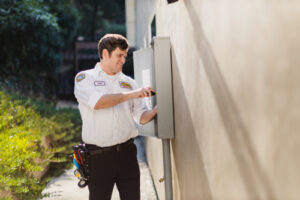
What Are Meter Cans Made Of?

First of all, let’s start with materials. Loader bodies are generally made of aluminum, steel, or both. The materials are also highly recyclable, meaning your old meter can doesn’t have to go straight to a landfill. The planet and you win. A Pompano Beach-based client recently told me how recycling her meter can give her a feel-good moment — she used the refund from the recycling center for coffee at her favorite café. Win-win!

Option 1: Recycling Centers

The superhero solution here is recycling. The metal components of the old meter cans are among the reasons they are accepted at most local recycling centers.

Before you give it a check-up, dock it off and:

  • Take off any wires or attachments.
  • If it’s dirty, give it a quick wipe.
  • Do call ahead to confirm that the center accepts the material.

After all, here’s a fact: Recycling one aluminum foil meter can save enough energy to power up your laptop for three hours! Now that’s worth the effort, am I right?

Option 2: Scrap Yards

The same goes for scrap yards; this is also a great option if you want some cash. Even scrap aluminum and steel have value. Some nicely rated scrap yards in Pompano Beach will gladly take your meter can off your hands. “But I didn’t just get rid of the can—I got lunch money!”
If you look to a scrap yard, ensure you have removed the non-metal parts of the can. Some yards may impose fees for parts with too much plastic or residue.

Option 3: Upcycling Projects

Feeling creative? Upcycling is a dream for the eco-conscious DIYer. Old meter cans can become eccentric planters, unusual storage containers, or art installations. We once heard that a local artist in Pompano Beach repurposed several holey meter cans into an impressive wall sculpture. It’s evidence that one person’s trash is another person’s masterpiece!
If you aren’t into DIY, look for local upcycling groups or art communities — they may be happy to take the can off your hands.

Option 4: Dispose the Right Way with a Professional

If all of this sounds like a hassle, don’t worry. We’ve got you covered at Service Minds, Mister Sparky. If you choose us to carry out the electrical services for your new meter can installation, we can also offer to dispose of your old meter can responsibly. Our team is knowledgeable in your local guidelines and ensures that every item is disposed of properly, whether by recycling or eco-friendly disposal. How to Get Rid of Malarky! —we’re going to make things smooth and simple.

The Importance of Eco-Friendly Disposal

Did you know incorrectly discarded meter cans can cause ground pollution? Left to corrode in landfills, metals leach toxins into the soil and water. And mining new metals takes a lot of energy. You can also recycle your old meter or reuse the equipment, an eco-friendly option. Practicing responsible disposal — by recycling, for example — adds up and helps us build a greener future.

Pompano Beach is Committed to Sustainability

Sustainability: Here in Pompano Beach, FL, it’s not just a buzzword; it’s a way of life. From clean energy initiatives to community recycling programs, our city has much to be proud of when it comes to protecting the environment. So, when it comes to disposing of your old meter, you can respectfully do so for the climate. NLM is aligned with that commitment. Your decision — recycling, upcycling, or leaving it to the pros — helps.

Final Thoughts

Say goodbye to an old meter can doesn’t have to be a pain in the ass — or an environmental faux pas. Many recycling options include recycling centers, scrap yards, upcycling projects, and professional services from Mister Sparky. So the next time you’re looking at that old meter can, remember: “Don’t Put Up With Any Malarky!” “The only place to keep your home well and the environment clean is to do your part for the planet.

Filed Under: Blog

How do advancements in smart grid technology affect meter can design?

Smart Grid
You would need to get out there to see for yourself that the world of electricity you knew is quickly changing. Thanks to advances in smart grid technology, the lowly meter—a bedrock of household and commercial power distribution—is receiving a high-tech upgrade. At Mister Sparky, serving its community in Pompano Beach, FL, these innovations should mean more than just interest to tech geeks; they are crucial for homeowners and electricians. So, without further ado, let us understand how these futuristic grids are driving a change in meter can design. And as always, “Don’t Put Up With Any Malarky!”

The Smart Grid Revolution: A Game-Changer

Imagine this: it’s a scorching summer afternoon and your air conditioner blasts. This means a higher electricity bill and minimal visibility into real-time energy use in a traditional grid. Here’s where the smart grid comes in—a system that talks to smart meters to provide real-time monitoring, management, and optimization of electricity consumption.
Old-school meter cans don’t do it anymore for this level of sophistication. They are being revamped to enable high-tech smart meters with two-way communication. These modern devices monitor consumption, send data about energy usage patterns, and receive data about outages and even carbon footprints. A neighbor (in Pompano Beach) once said it was “Like giving your electric meter a brain and Wi-Fi!”

The Need for Enhanced Durability and Compatibility

Living in coastal areas like Pompano Beach presents unique challenges—salt air, humidity, and the occasional hurricane test the limits of electrical equipment. Smart grids require meter cans built to withstand these elements while housing sensitive smart meters.

Manufacturers are building their game by designing meter cans with corrosion-resistant materials and weatherproof seals. These upgrades ensure that your power stays reliable even in the harshest conditions. At Mister Sparky, we’ve seen firsthand how these robust designs make a difference for homeowners who don’t want to deal with malfunctions—or malarky.

Smaller, Smarter, and Safer Designs

Another major shift is the move toward compact and modular meter cans. Bulkier designs were the norm in the past, often taking up valuable space on your property. Now, with brighter components and better materials, meter cans are shrinking in size while expanding in capability.

Take, for instance, a customer we recently helped in Pompano Beach. They upgraded to a smart meter compatible with their solar panels. The new, sleeker meter can fit snugly into a tight corner and support advanced features like real-time energy tracking. The result? A happy homeowner with reduced bills and an eco-friendly setup.

Cybersecurity in Meter Can Design

Here’s a curveball: Innovative technology comes with the risk of cyber threats. Smart grids connect millions of devices, and a one-meter vulnerability could compromise the system. This trend has compelled designers to incorporate security into meter cans, including tamper-resistant locks and data encryption.
It’s like having a bouncer at your neighborhood nightclub. This ensures that only authorized devices can access the system, protecting against hackers. At Mister Sparky, we tell our clients, “Secure power is happy power.” Who wants toxic malarky like data breaches messing with their electricity?

Building to Last: Future-Proofing

The rapid pace of innovative grid advancements means meter can designs must anticipate future needs. From supporting renewable energy sources like solar and wind to handling electric vehicle (EV) charging stations, today’s meter cans are built with tomorrow in mind.

One Pompano Beach resident told us, “It feels like upgrading my home to match the future. The old stuff just doesn’t cut it anymore.” Considering an EV or installing solar panels, having a future-proof meter can ensure you’re not stuck playing catch-up.

Why It Matters to Pompano Beach Residents

As for the people of Pompano Beach, FL, these advances aren’t hypothetical; they’re practical. A new smart grid meter helps reduce outages, energy management, and utility bills. With Mister Sparky on your side, you know you’re getting reliable advice and top-notch installation.
So, if your meter can looks like it belongs in a museum, it’s time to make a change. Call us today, and remember: “Don’t Put Up With Any Malarky!” Together, let’s power your home for the future.

Filed Under: Blog

What are the environmental benefits of lightning?

lightningLightning, one of nature’s most awe-inspiring phenomena, is often misunderstood. Although it may be destructive, it nonetheless plays a crucial regulating role in ecosystems, which can be considered beneficial overall. Here are some fun facts about this electric phenomenon and its natural benefits. At Mister Sparky in Pompano Beach, FL, we remind you, “Don’t Put Up With Any Malarky!”.

A Natural Nitrogen Fixer

Plants need nitrogen to grow but can’t directly swipe atmospheric nitrogen. That’s where lightning comes in. When lightning strikes, extreme heat fuses nitrogen and oxygen in the air to create nitrogen oxides. These compounds dissolve in the rain and fall to the ground, enriching the soil.
Like nature’s way of fertilizing plants, lightning helps keep local flora flourishing in Pompano Beach, FL, surrounded by lush greenery. Without these natural nitrogen fixers, agricultural systems and ecosystems would struggle to maintain fertility.

Purifying the Atmosphere

Lightning is an air scrubber. The massive watts on a blow fracture pollutants similar to methane and different greenhouse gases, turning them into less dangerous compounds. It’s nature’s way of shoving a vacuum into the atmosphere and giving it a good reset, the same way you feel so fresh after a thunderstorm.
If you grew up, you may have noticed how the air smells so fresh after a storm. That’s no coincidence! Lightning aids in this purging effect, showing us that storms, while fearsome, can also provide a cleaner and safer environment for all of us.

Sparking Forest Regeneration

In particular ecosystems, wildfires sparked by lightning are a necessary evil. Fires started by lightning, called controlled burns, clear dead plants out of the path of budding new ones. This process reinvigorates the soil and permits sunlight into the forest floor below, providing an ideal habitat for various species.
Although wildfires in human-populated areas, such as Pompano Beach, are problematic, human strikes will ultimately help heal and maintain the ecological balance in remote forests. Sometimes, they say, you need to clear the ground for new growth.

Enhancing Biodiversity

Lightning affects biodiversity in a ripple effect. It leads to diverse habitats by stimulating natural processes such as soil enrichment and the regeneration of forests. The changes in the electric marvel are beneficial for animals, insects, and plants.
For example, birds could nest in newly renewed forests, and insects flourish in nitrogen-enhanced soils. Here in sunny Florida, the difference that biodiversity makes is clear from our verdant parks to our rich ecosystems.

Stimulating the Water Cycle

Lightning adds heat to vaporized water, helping it to condense, an essential part of the water cycle. That helps fuel rain, especially in places such as Pompano Beach, where afternoon storms are practically a summertime rite of passage. “More rain equals hydrated soils and healthier vegetation, which equals a sustainable environment for people and wildlife.”

A Lightning Legacy

As early as the 1800s, farmers in Florida observed that their crops grew better after thunderstorms. Lacking today’s scientific instruments, they credited it to “God’s hand.” Little did they know that the lightning was busily enriching the soil, guaranteeing bumper crops. How chaotic fireworks like lightning can quietly do vital and mundane tasks is fantastic.

The Takeaway

Lightning isn’t just a beautiful display of nature’s might — it’s crucial to the planet’s ecological systems. From enriching the soil to cleaning the air, it’s clear that this natural phenomenon provides more than just noise and sparks.
At Service Minds, Mister Sparky, we think understanding the natural world is essential for human safety and innovation. If you have questions about how we use this knowledge in our work here in Pompano Beach, FL, hit us up. And remember, “Don’t Put Up With Any Malarky!”

Filed Under: Blog

What is the process of lightning-induced soil vitrification?

What is the process of lightning-induced soil vitrification?Lightning does not merely strike the ground to create a burn mark, make a noise, and start soil vitrification when it hits the earth. This phenomenon is caused by intense heat from a lightning strike, turning the soil into this glassy crazy structure. If you’ve ever been in the sandy country and come across oddly shaped glassy tubes, you will likely have spotted fulgurites — nature’s memorials to lightning. Let’s explore how this natural marvel comes together and why it’s more than a random, quirky act of nature.

The flash of Lightning: The Spark of the Firestorms

Imagine a storm rolling over Pompano Beach, FL. The sky darkens, and a jolt of light splits it. That lightning bolt comes out at up to 220,000 miles per hour and has temperatures hotter than the sun’s surface — about 30,000 Kelvin! When this tremendous energy hits the ground, it doesn’t give a polite knock; instead, it explodes into the dirt, sending shock waves and heating the area instantly. Here is how the process begins: the natural minerals in the soil are melted by this extreme heat.
It’s not backyard barbecue heat we’re talking about here — it’s a cosmic oven, transforming ordinary grains of sand into something sublime. And at Service Minds, Mister Sparky, we know lightning doesn’t follow the law. “Don’t Put Up With Any Malarky!” is when we learn about electrical phenomena.

Melting and Fusion: When Fulgurites Are Born

The heat from lightning penetrates the soil, causing silica and other minerals in the sand or dirt to melt. The molten stuff — thousands of degrees Fahrenheit — sticks together. Now it gets magic: As heat flees and the temperature cools, the liquefied soil crystallizes into disorganized, hollow, glassy tubes. Such formations are called fulgurites, from the Latin fulgur, meaning lightning.
However, its shape and size vary based on the force of the lightning strike and soil. Such sandy locales as beaches near Pompano Beach, FL, are primarily responsible for producing these natural works of art, as one of the significant glass components is the silica in sand. It’s like discovering a custom-made fulgurite after a storm: The earth saved a lightning bolt just for you!

The Role of Soil Composition

However, not all soils are equal when it comes to vitrification. Sandy soils heavy in silica are ideal candidates for fulgurite. Clay-rich or organic soils, however, may not be as prone to vitrification because they lack the silica required to produce glass. This is why coastal regions heavy in the sand often feature these natural glass tubes following intense storms.
Certain fulgurites may contain trace elements or impurities that give them distinct colors or patterns. Imagine nature’s abstraction—sculpted by lightning itself. Look out for these rare, electrifying creations next time a storm rips through Pompano Beach.

Implications for Science and Practice

Although fulgurites may seem like mere curiosities, they offer scientists valuable information about lightning’s behavior and the composition of the earth beneath its surface. Describing fulgurites allows researchers to understand the energy, pathways, and local environment of lightning strikes and when fulgurites are formed.
But it’s not just a scientific approach — it’s a safety approach. So, understanding how lightning interacts with the ground can help explain some of the best ways of electrically grounding things, which can help keep your home safe when storms roll through. Keeping systems grounded, worries lifted. It is business as usual over at Service Minds, Mister Sparky. Do not put up with any malarky! Regarding lightning safety.

The Takeaway

Lightning-induced soil vitrification might seem like a scientific curiosity, but it is evidence of nature’s primal force. Next time the thunder rolls over Pompano Beach, FL, remember — a piece of her soil can turn into an awe-inspiring piece of glass with a lightning bolt. Should you ever wonder or worry about how lightning could impact your home’s electrical safety, contact Mister Sparky. We’re here to ensure your systems are secure, come rain or shine.
Because when lightning strikes, it doesn’t just leave a mark — it leaves a story. And with us on your side, you’ll never have to fret over the unexpected. “Don’t Take Any Malarkey!” Call today to safeguard your home from the unpredictable force of the storms.

Filed Under: Blog

Stray Voltage: How Does Grounding Protect Against It?

Stray Voltage: How Does Grounding Protect Against It?Stray voltage is one of those sneaky electrical phenomena that’s almost invisible but can cause a lot of trouble if not properly managed. Whether you’re a homeowner or a business owner in Pompano Beach, FL, understanding how grounding protects against this issue is crucial. At Mister Sparky, we believe in making electrical safety simple and effective—Don’t Put Up With Any Malarky! Here’s how grounding protects your property and loved ones from stray voltage.

What is Stray Voltage?

Imagine walking barefoot across your lawn after a rainy day, only to feel a faint tingle from the soil beneath. That’s stray voltage in action. It’s an unintended flow of electricity that can show up on metal surfaces, wet ground, or even inside your home. Stray voltage occurs when electrical currents from faulty wiring or ungrounded systems leak into unintended areas. It’s usually low-level but poses safety risks, especially for people and animals.

An old neighbor of mine used to call it “ghost electricity”—a reminder that it’s sneaky, unpredictable, and best left to professionals. If you’ve ever doubted the importance of grounding, this phenomenon should convince you otherwise.

The Role of Grounding in Electrical Safety

Grounding is the unsung hero of electrical systems. At its core, grounding gives electricity a safe path to the earth, minimizing the risks of stray voltage. Think of it as the ultimate “back door” for wayward electrical currents. When stray voltage occurs, the grounding system kicks into action, redirecting that rogue energy into the ground instead of letting it linger dangerously on appliances, pipes, or exposed surfaces.

Without grounding, your home would be like a ship in a storm without an anchor—prone to damage and chaos. Grounding systems stabilize electrical currents and ensure everything runs smoothly, even when something goes wrong.

How Grounding Protects Against Stray Voltage

  • Creates a Path to Safety
    When stray voltage appears, grounding acts like a magnet, pulling the excess electricity into the earth. This prevents the current from causing shocks or damaging equipment. For instance, if a faulty appliance leaks electricity, grounding ensures the stray current doesn’t zap when you touch it.
  • Prevents Dangerous Build-Up
    Stray voltage loves to linger where it shouldn’t—like an unwanted guest who overstays their welcome. Grounding prevents this by dispersing excess electricity safely, reducing the chance of accidental shocks or fires.
  • Protects Sensitive Equipment
    Modern homes and businesses in Pompano Beach contain electronics sensitive to voltage fluctuations. Without proper grounding, stray voltage can damage or even destroy these devices. Grounding acts as a buffer, shielding your investments.

Real-Life Benefits of Grounding

A friend once ran a small café that doubled as a local hangout spot. One day, customers complained about mild shocks when they touched the fridge. It turns out that an old, ungrounded outlet allowed stray voltage to build up. After a quick call to Mister Sparky, we installed a proper grounding system, and the issue disappeared faster than you can say “coffee break.”

This is why grounding isn’t just an optional upgrade—it’s necessary for homes and businesses. Stray voltage doesn’t discriminate; it can strike anywhere, anytime, especially in humid climates like Pompano Beach.

Why Grounding Matters for Pompano Beach Homes

Living in a coastal city like Pompano Beach means extra exposure to moisture and salt, which can amplify electrical issues. Proper grounding systems are especially vital here to combat the unique challenges posed by the environment. Whether it’s protecting against lightning strikes or stray voltage, grounding keeps you safe and sound.

Trust the Pros for Safe Grounding

When it comes to grounding and electrical safety, shortcuts aren’t an option. At Service Minds, Mister Sparky, we ensure your grounding systems are up to code and built to last. Whether you’re dealing with stray voltage or want peace of mind, remember our motto: Don’t Put Up With Any Malarky!

Call us today, and let’s make your home or business the haven it’s meant to be. A solid grounding system will prevent stray voltage.

Filed Under: Blog

Why is it important to ground temporary electrical installations?

Importance Of Grounding Temporary Electrical Installations

Importance Of Grounding Temporary Electrical Installations

Imagine this: you’re organizing an outdoor event in beautiful Pompano Beach, FL, with food trucks, live music, and a large crowd. All are prepared, though the band’s gear suddenly shorts, causing an embarrassing silence. Why? Because somebody forgot to ground the temporary electrical system properly.

Temporary electrical setups seen in places like events, construction sites, or emergency setups may not look as serious as permanent wiring, but the implications of improper grounding can be devastating. Let us explain why grounding is so important, how it protects people and equipment, and how Mister Sparky can help keep everything grounded. After all, “Don’t Put Up With Any Malarky!”

What does it even mean to be grounded?

Grounding isn’t some engineering mumbo-jumbo electricians use to sound smart. It grounds electrical systems to the earth so that stray currents can travel down a safe route. Consider this: When there’s a lightning strike or a circuit gone haywire, grounding behaves like a bouncer, directing excess electricity away from people, machinery, and sensitive systems. It’s the unsung buddy that makes pop-up setups operate and safe.
This grounding is essential for temporary installations. Unlike permanent systems, which are subjected to scrutiny and built to last, temporary setups often include cobbled-together precautions and jury-rigged wiring. Without a proper intellectual grounding, these systems are tightrope walkers over disasters.

The Hidden Dangers If You Do Not Ground

Think of grounding as your insurance against electrical mayhem. Without it, temporary electrical installations can turn into ticking time bombs.

Here’s what’s at stake:

  • Electrocution Hazards
    Picture a construction worker accidentally touching an ungrounded metal frame connected to faulty wiring. The lack of grounding means there’s no escape route for electrical currents, increasing the risk of life-threatening shocks.
  • Equipment Damage
    Temporary setups often involve expensive gear—power tools, sound systems, or portable lights. An ungrounded system can expose this equipment to surges and spikes, fry circuits, and leave you with hefty replacement bills.
  • Fire Risks
    Electrical currents running wild can generate heat, leading to sparks or fires. Imagine the chaos of a fire erupting at an outdoor festival due to poorly grounded temporary wiring. Proper grounding slams the brakes on such scenarios.

Safety First: Why There’s No Price Too High to Pay

Grounding is not only a safety measure; it is a necessity. That can be an unexplored beast in temporary setups, with wires hanging out, currents changing, and many other factors, from rain to humidity, in the tropical climate of Pompano Beach.

Grounding ensures:

  • Shock Absorption: It sends stray currents to the ground, protecting humans from accidental electrocution.
  • Equipment Longevity: Grounding shields devices from sudden electrical surges by stabilizing voltage levels.
  • Code Compliance: Florida law requires that all electrical equipment be properly grounded. Failure to do so could result in fines or shutdowns.

How Mister Sparky Can Assist

Here at Service Minds, Mister Sparky, we don’t joke about your safety. Whether you require a temporary generator for a construction site or a stage setup for your beachside wedding, we ensure each cable is properly grounded. Our team understands the unique electrical challenges of Pompano Beach, from corrosive, salt-laden air that can deteriorate connections to sudden thunderstorms that require additional preventive measures.
By choosing us, you’re not just hiring electricians but investing in peace of mind. No, as we say, “Don’t Put Up With Any Malarky!” We’ve got your back for setup through teardown — ensuring every volt goes where it belongs.

A Lesson in Grounding

Our most recent client was a local event planner who quickly learned the importance of being grounded. They’d contracted an unseasoned contractor for an outdoor concert. Everything was OK until a sudden downpour revealed subpar wiring, resulting in blown speakers and panicked crowds. That’s when they called us.
We cleaned up the mess and trained the customer to understand the importance of grounding. Their reviews say all you need to know; they won’t establish an event without us.

The Bottom Line

Temporary electrical installations aren’t simply stop-gap solutions—they’re lifelines for countless operations. Proper grounding protects people, equipment, and reputations. So whether you’re managing a construction site or organizing the next big event in Pompano Beach, don’t play roulette with safety.
Leave the proper grounding of your setup to Trust Service Minds, Mister Sparky. After all, “Don’t Put Up With Any Malarky!”

Filed Under: Blog

How do I safely work on live circuits?

How do I safely work on live circuits?Working on live circuits can be high-stakes, even for experienced electricians. Safety should always take center stage—one wrong move could mean serious injury or worse. Whether you’re troubleshooting a problem or performing maintenance in Pompano Beach, FL, there’s no room for shortcuts. At Service Minds, Mister Sparky, we’re all about keeping the job safe, professional, and malarky-free. So, here’s the lowdown on working with live circuits while staying out of harm’s way.
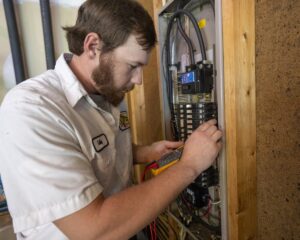
Understand the Risks First

Before you even think about touching a live circuit, understand the dangers. Electricity doesn’t just shock—it can cause burns, fires, or even fatalities. Imagine an old buddy who once bragged about rewiring his garage without turning off the power. Let’s say he spent the next week telling his “electrician battle scars” story to anyone who’d listen. Don’t be that person. Respect electricity or it will humble you.

Gear Up Like a Pro

When dealing with live circuits, wearing the right gear isn’t optional—it’s essential. Insulated gloves, rubber-soled boots, and flame-resistant clothing can mean walking away unscathed or ending up in an ER. And for goodness’ sake, don’t wear metal accessories like rings or watches. One spark is all it takes to turn them into branding irons.

Always double-check your tools, too. Insulated screwdrivers and pliers that are explicitly designed for electrical work. A multimeter can help verify voltage levels before you touch anything. At Service Minds, Mister Sparky, we say, “Don’t Put Up With Any Malarky!” That includes sketchy gear or equipment.

Follow These Golden Rules

  • One-Hand Rule: Always work with one hand if you must work on live circuits. This reduces the risk of electricity traveling across your chest, where it could damage your heart.
  • Stay Dry: Moisture is a big no-no. Sweat, rain, or even damp floors can conduct electricity straight to you. Keep your work area dry and tidy.
  • Maintain Focus: Distractions are dangerous when working live. Step back, breathe, and regroup if you’re not fully tuned in.
  • Use Barriers: Non-conductive barriers like rubber mats or insulated blankets add an extra layer of protection.

Plan for Every Possibility

Nobody wakes up thinking, “Today’s the day I get electrocuted.” But preparation is key. Know where your circuit breakers are, and have someone nearby who can cut power in an emergency. Keep a first-aid kit and a fire extinguisher (Class C for electrical fires) within arm’s reach. We preach readiness at Service Minds, Mister Sparky, because it saves lives.

Avoid Lone Wolfing It

Working solo on live circuits is not brave: It is reckless. The buddy at your side isn’t just to help with moral support. Whoa, if something goes wrong, they can call for help. You’d be surprised how often disaster is avoided through teamwork. My old mentor said, “If you think you’re too cool for backup, electricity will be your humbler.”

Call in the Experts

We’ll see you on the other side. So cross the street, resist temptation, take the subway, keep your head in the game, bring the rest of yourself with you, and remember: Sometimes, the safest thing to do is not do it yourself. Complicated jobs on live circuits can intimidate even seasoned DIYers. Enter Mister Sparky in Pompano Beach, FL. Whether it’s residential troubleshooting or commercial repairs, we have the skills, the tools, and the mantra: Don’t Put Up With Any Malarky!

Final Thoughts

Working on live circuits is serious stuff. The trick is preparation, precision, and knowing when to call in the pros. Obey the rules, respect the risks, and do not cut corners. Because no task is worth your safety—or your life—at the end of the day.
So, the next time you’re lured to take on a live circuit, remember that safety is not negotiable. And if you need assistance, you can contact Mister Sparky in Pompano Beach, FL. Don’t Take Any Malarky! Stay safe, stay smart, and let’s keep those sparks where they should be.

Filed Under: Blog

What is a series circuit versus a parallel circuit?

What is a series circuit versus a parallel circuit?
The terms “series circuit” and “parallel circuit” are bandied like people know what they mean in basic electronics. But let’s be honest — very few of us nailed that part of high school science class. So whether you’re rewiring your home or just curious, understanding the distinction can save you from a whole bunch of malarky (and possibly a blown fuse). At Service Minds, Mister Sparky, we like to keep things simple for our friends in Pompano Beach, FL—let’s keep it simple, shall we?

The Lowdown on Series Circuits

Imagine a string of vintage-style Christmas lights. You plug them in, and boom — one bulb goes out, and next thing you know, the entire string is dead. That’s a textbook example of a series circuit. In this configuration, electrical elements are connected in series — much like formulations of cars on a train. It indicates that the current passes through each component, forming a single pathway.
Here’s the kicker: any break in the circuit will stop the flow altogether. As a result, series circuits are easy to create but not reliable. Imagine a group of hikers roped together—if one person stumbles, the group gets slowed down. It can be efficient but also carries significant risks.

Parallel Circuits: The Scoop

Now, compare that to the electrical system in your house. You can still switch off the bathroom light and not shut down the entire house, am I correct? Most homes have parallel circuits, in which each electrical component has its own pathway to the power source.
Consider performance with a multilane highway rather than a lone dirt track. Traffic can then move in the remaining lanes if one becomes blocked. This more complicated and reliable design makes it a preferred option for modern electrical systems. No malarky here — this is the more brilliant choice for most applications.

Key Differences at a Glance

To put it plainly:

  • Series Circuit: Single pathway for current. One break, and it’s game over.
  • Parallel Circuit: Multiple pathways. One failure? No problem—the rest keeps working.

Understanding these circuits isn’t just academic for homes in Pompano Beach, FL, where reliable power is necessary (hello, hurricane season). Practical knowledge can help you make informed decisions about your electrical system.

Real-Life Applications

So, where do we find you with these circuits? Older or low-power devices, such as flashlights, often use series circuits. They’re also used in safety setups like string alarms, where if a single part doesn’t work, you want the whole system to alert you.
Parallel circuits, by contrast, predominate in household wiring. They keep your fridge cold even if a kitchen light bulb dies. There is no need to settle for any malarky when making the right design for your needs.

Why Does It Matter?

Here’s a little tale to drive the point home. Table of Contents A Pompano Beach client just called us to report their flickering lights. They had an old-fashioned series circuit in a section of their house, and when one switch didn’t work, it put the whole system out of commission. We rewired them into a parallel circuit arrangement, and they thought they would faint from shock. At Service Minds, Mister Sparky, we’ll always ease your life effortlessly with no hassle, no hassle, and no malarky.

Need Help? Call the Pros!

Knowing how to identify the difference between series and parallel circuits is one thing; managing them safely is another. If you have questions or concerns regarding your electrical system while in Pompano Beach, FL, reach out to Mister Sparky. Whether it’s a minor repair or a complete overhaul, we will do it carefully and accurately. And remember, it’s our motto that we live by: Don’t Put Up With Any Malarky!
If there is one team you can trust to keep your home powered and safe, it’s the team that knows the difference between a train wreck and a smooth ride. Call us today to find out more or arrange a service.

Filed Under: Blog

  • « Previous Page
  • 1
  • 2
  • 3
  • 4
  • 5
  • 6
  • …
  • 8
  • Next Page »

How can we help you?

Your Name(Required)
Consent(Required)
By submitting your information, you agree to allow Mister Sparky to contact you via phone, email, or text regarding your project inquiries. Rest assured, your personal information will remain confidential and will not be shared with third parties for marketing or spam. You can opt out whenever you wish. Standard message/data rates may apply. Consent is not a condition of purchase.
Terms and Conditions | Privacy Policy

Our Location

Mister Sparky
1593 Banks Rd,
Margate, FL 33063

Phone: (954) 271-2743

Hours of Operation:

Monday: 24 Hours
Tuesday: 24 Hours
Wednesday: 24 Hours
Thursday: 24 Hours
Friday: 24 Hours
Saturday: 24 Hours
Sunday: 24 Hours

Connect with Us

Facebook Youtube

Our Services

Breakers & Fuses
Ceiling Fans
Chandelier Installation
Circuit Repair
Commercial
Electrical Grounding
Safety Inspection
Outlet Installation
Outlet Repair
Electrical Panel Replacement
Electrical Repairs
Troubleshooting
Electrical Emergencies
EV Charging Stations
Generator Installation
Light Fixture Installation
Lightning Strikes
Meter Can Replacement
Outdoor Lighting
Smoke Detectors
Surge Protection
House Rewiring

About

Our Company
Contact Us

Copyright © 2026 · Service Minds | License: EC13008406 | Privacy Policy • Terms and Conditions

Book Online
(954) 271-2743