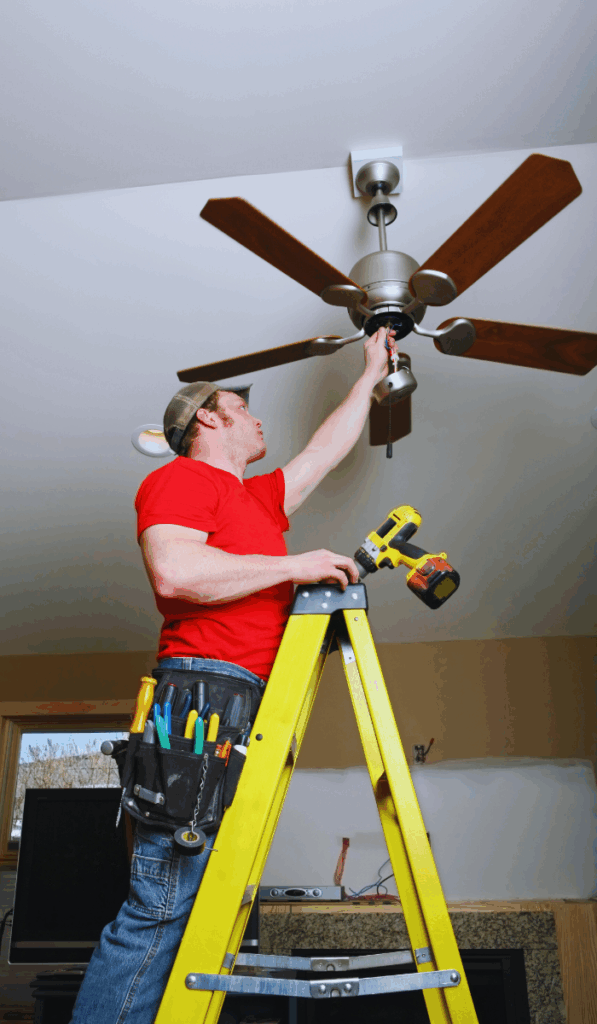
 Flickering lights and humming noises aren’t reserved for horror flicks. If you’re experiencing ceiling fan malfunctions, there are early warning signs that will alert you to the problem. To avoid an unexpected breakdown, wiring issues, and electrical fires, it’s essential to get these symptoms diagnosed and repaired right away.
Quick Takeaways
- Humming, buzzing, and clicking noises are often signs of an issue with your wiring or motor bearings.
- Burning odors and overheated fans stem from potentially dangerous electrical faults.
- If the capacitor or switch is faulty, the fan may run slowly or fail to start.
- For your safety, always turn off the power before you try troubleshooting the issue.
How To Tell If Your Ceiling Fan Has Electrical Problems
If your ceiling fan is having electrical issues, you may notice some of the following symptoms.
1. The Lights Flicker or Dim
Flickering lights are often due to loose bulbs, voltage issues, worn wiring harnesses, or faulty wall switches. Try screwing the bulb in again. If this doesn’t work, you’ll need a professional electrician.
2. The Fan Makes Buzzing or Humming Noises
By lubricating bearings, looking for frayed wiring, and tightening connections, you can troubleshoot for loose screws and issues with the motor housing.
3. The Motor or Fan Housing Feels Hot
This symptom can be due to a short circuit, poor airflow, or overloaded motors. Try cleaning off any dust, checking the amperage, and tightening the wiring.
4. The Fan Runs Slowly or on Only One Speed
You may notice this symptom if the capacitor is faulty. It can also be due to a wiring fault or a malfunctioning speed switch. You’ll need to call a licensed electrician to test the wiring continuity. Our electricians can also replace the capacitor or switch as needed.
5. The Fan Shuts off Unexpectedly
Tripped breakers can cause this symptom, so you can troubleshoot by resetting the breaker. A professional can determine if electrical shorts and overheated circuits are the cause.
6. You Notice Sparks, Burning Odors, or Smoke
These symptoms may be due to short circuits, exposed wires, and failed motor wiring, so you should immediately turn off the ceiling fan. Then, call an electrician right away.
7. The Wall Switch or Remote Doesn’t Respond
To troubleshoot this problem, try replacing the remote battery. Check to see if the remote receiver is operating properly. If this doesn’t help, test the wall switch wiring for a potential wiring fault.
8. Circuit Breaker Trips When the Fan Runs
In this situation, try resetting the breaker once. If it immediately trips again, you’ll need an expert to determine whether you’re dealing with a short in the motor or a faulty capacitor.
The Main Reasons Why You May Experience Ceiling Fan Electrical Issues
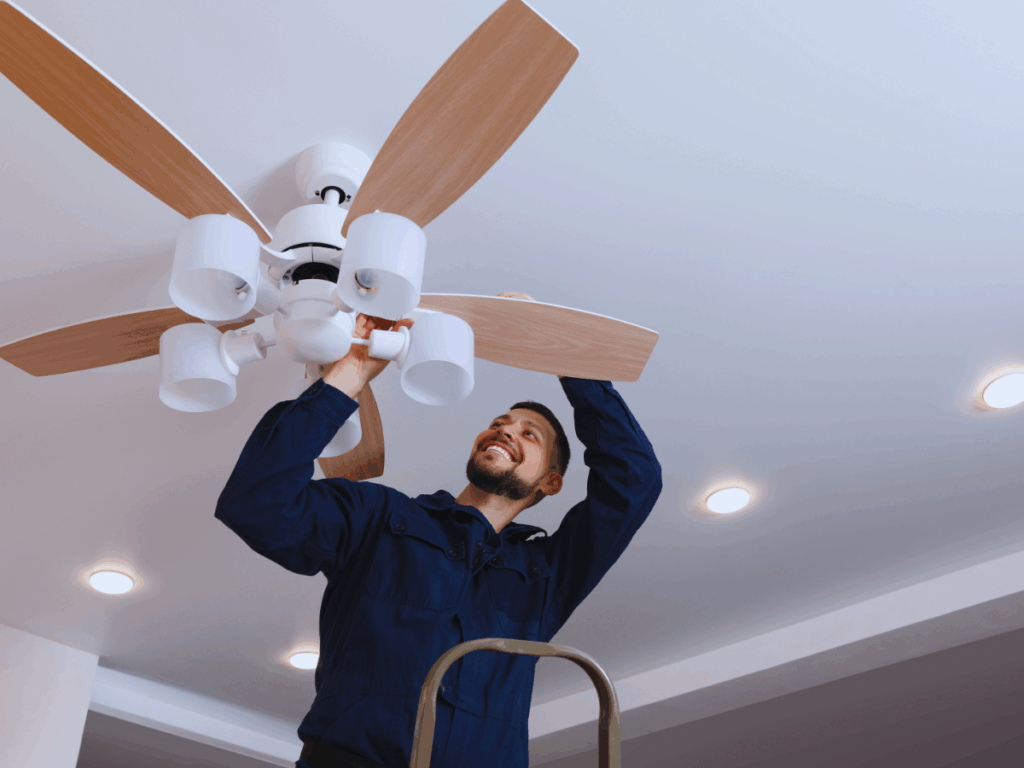 There are a few common reasons why ceiling fans may develop electrical malfunctions.
Aging or Faulty Wiring
Insulation can eventually break down and cause wires to short.
Poor Installation Work and DIY Mistakes
A badly installed ceiling fan can lead to a range of potential dangers.
Failing Motor or Capacitor
These devices can eventually fail, resulting in issues starting up.
Overloading the Electrical Circuit
When multiple devices are on the same circuit, it can cause voltage fluctuations and tripped breakers.
Lack of Maintenance
Poor maintenance can increase the likelihood of wear and electrical resistance.
DIY Troubleshooting Steps That Are Safe for Homeowners
When your ceiling fan isn’t working properly, you can attempt to troubleshoot through the following steps.
Step 1: Cut the Power at the Breaker
Never troubleshoot while the power is on.
Step 2: Tighten Screws
When screws are loose, it leads to added vibration and unnecessary wear.
Step 3: Inspect the Wiring and Switch
Pay attention to frayed wires and scorch marks.
Step 4: Test the Capacitor and Switch
A multimeter can help you detect issues.
Step 5: Clean and Lubricate
Clean dust from the vents and blades to prevent the ceiling fan from overheating.
For persistent safety issues, you should always call a professional. Never attempt complicated electrical work on your own.
When To Call an Electrician
Professional electricians have ammeters, insulation testers, and other diagnostic tools that can diagnose complex problems. Call a professional if you experience burning odors, overheating, flickering, or wiring problems. If the fan stops mid-cycle or is acting in an odd manner, you should get help as well.
Preventive Maintenance Tips
To prevent damage, remember to clean the blades and housing regularly. Besides tightening screws, you should always use the right bulb wattage. To avoid issues, you should schedule an annual inspection and call for repairs as soon as you notice a problem.
FAQs
Over the years, we’ve fielded a few common questions about ceiling fans.
Why is my ceiling fan making a humming noise?
Humming and buzzing sounds often stem from loose wiring or vibration in the fan. A failing capacitor may also be responsible for this issue.
Can a ceiling fan cause an electrical fire?
Absolutely. If there is a short circuit or overheated wiring, it can lead to sparks and a house fire.
How do I know if my capacitor is bad?
If your capacitor is going bad, your fan may only run at one speed. It may also start slowly or hum without spinning.
Is it safe to keep using a flickering fan light?
No. This represents an underlying issue that needs to be repaired as quickly as possible. Flickering could be due to wiring malfunctions or a fluctuation in the fan’s voltage.
How often should I have my ceiling fan inspected?
We recommend getting it inspected once per year. If you notice any unusual sounds, flickering lights, or unexplained heat, call right away for help.
Fix Your Ceiling Fan Before It Fails
 Don’t put up with any malarkey! Whether your fan’s flickering, humming, or flat-out refusing to spin, our licensed electricians can help.
We handle ceiling fan repairs, replacements, and professional installations for every room in your home. From diagnosing faulty wiring to installing new energy-efficient models, we make sure your fan runs safely and smoothly.
Give Pompano Beach’s Mister Sparky, America’s on-time electrician a call today for fast, reliable service you can count on—before your ceiling fan calls it quits for good.